
Sports Physio in Coorparoo, Brisbane
Get Out of Pain. Move Better. Stay in the Game.
At BL Physio, we provide expert hands-on sports physiotherapy for active people across Brisbane, from our boutique physiotherapy clinic in Coorparoo.
We believe that recovering from a sports injury and getting out of pain is just the beginning. To return to the sport and activities you love, and stay active for life, you need to understand how your body works.
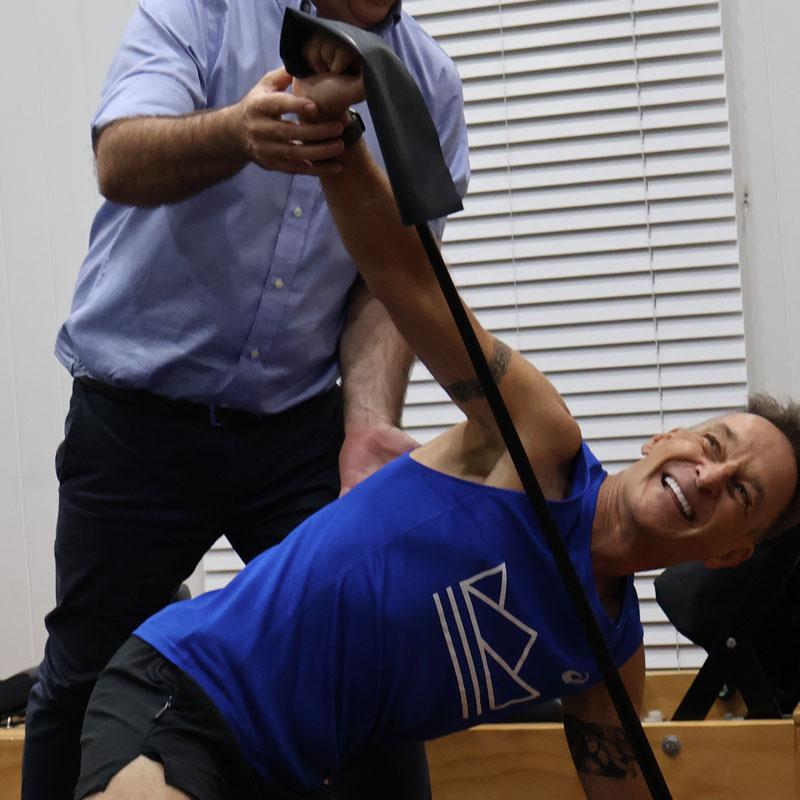
Our goal isn't just to get you better
That's why we combine hands-on sports injury treatment with a deep understanding of biomechanics, movement and strength to help you recover, move more efficiently and perform at your best.
We'll show you the simple things that make a big difference: how to walk and run more efficiently, identify weaknesses, build strength and use your own muscle-release techniques to keep your body moving freely.
Our goal isn't just to get you better. It's to teach you how to keep yourself better.
Whether you're recovering from a sporting injury, chasing a personal best or simply wanting to stay active as you get older, our Brisbane physiotherapists will help you understand your body, take control of your movement and keep doing what you love.
Get out of pain. Move better. Stay in the game for life.
Injuries rarely come out of nowhere
Most sports injuries build up quietly. A tight spot sits in a muscle, a trigger point you wouldn't even know was there until someone pushed on it. Over weeks it gets tighter, and it starts to change how that muscle works:
“It'll start to fatigue a muscle quicker, it'll start to inhibit a muscle, and then at some point it'll cause pain.”
Those points don't stay put, either. A sensitive point can wake up the muscles in the area it refers pain into, so you end up with a trail of tightness, say from your butt down the back of the thigh and into the calf. That's why the little shifting niggles matter. They're often the early warning.
So we treat the sore spot, and then we track back along the chain to what's loading it. That might be your technique, a gap in your strength, how your bike is set up, how you sit at your desk all day, or even how you sat in the car on the drive to your race.
Deload, release, strengthen
When you feel a twinge, there's a simple framework I want every athlete to know:
- Deload: take the load off straight away. Shorten your stride, change your grip, adjust the movement that's aggravating it.
- Release: if it's just a niggle, find the tight spot and release it. Sit on it gently for 20 to 30 seconds, or use contract–relax.
- Strengthen: fill the gap that let it happen, in the range you actually use in your sport.
“So remember, deload, release, strengthen.”
Everything has to be pain-free. If it's puffy, swollen, warm or red, don't touch it. Get to the doctor. Same if you've had circulation problems.
Keep moving while you recover
Complete rest usually isn't the answer. Take two weeks off and the tissue gets weaker, not stronger. You feel fine, go straight back to the same training, and it flares again because it can't handle the load yet. So we ease the load instead of switching it off, and work out what you can keep doing while it settles, so you don't lose all the fitness you've built.
For a runner close to a race, that might mean swapping some runs for water running. You're not giving up, you're freshening your legs so you get to the start line in one piece:
“It's not a disaster if you feel a little bit niggly to actually duck in and get into the pool.”
What a sports physio session includes
- A proper look at what's sore and what's loading it
- Hands-on treatment and release of tight, overworked muscles
- Strength work aimed at your gaps, not a generic program
- Technique changes where they're part of the problem: running, riding, lifting
- A return-to-training plan with clear steps
- Self-release strategies so you can look after it between sessions
That last one matters to me. I don't want you dependent on us. The more you understand your own body, your own trail of tight spots and how to release them, the more you can nip things in the bud yourself.
Performance, not just injuries
You don't need to be injured to see us. Many athletes come in to get on top of the little niggles before a big block of training, or to work on how efficiently they move.
A lot of it comes back to length. When you're longer and straighter through your body, you can start each movement from higher up rather than from your hips. That means longer levers, better endurance and less effort for the same work. Muscles tighten and shift your shape all the time, from a long week at work, a bad night's sleep or a long drive, so we'll show you how to get back to that long, straight body before you train or race.
Triathlon physio
Swim stronger. Ride faster. Run more efficiently.
At BL Physio, we've been helping triathletes perform at their best for over 10 years.
We're triathletes ourselves
We understand the unique physical and mental demands of triathlon. Whether you're preparing for your first sprint triathlon, chasing a personal best over 70.3, or tackling a full Ironman, getting your body working efficiently across all three disciplines is essential.
And we don't just treat triathletes. We're triathletes ourselves.
Our long-time physiotherapist and bike fitting specialist, Kieran Storch, is now a professional triathlete, recently placing second at Port Macquarie 70.3 behind world champion Jelle Geens. Meanwhile, BL Physio's Joel was out competing alongside the age-groupers at the same event.
We know what it takes to train, race and recover because we're involved in the sport ourselves.
Running Biomechanics: Go Faster for Longer
Running is often where the wheels fall off in triathlon, particularly when fatigue starts to build after the swim and bike.
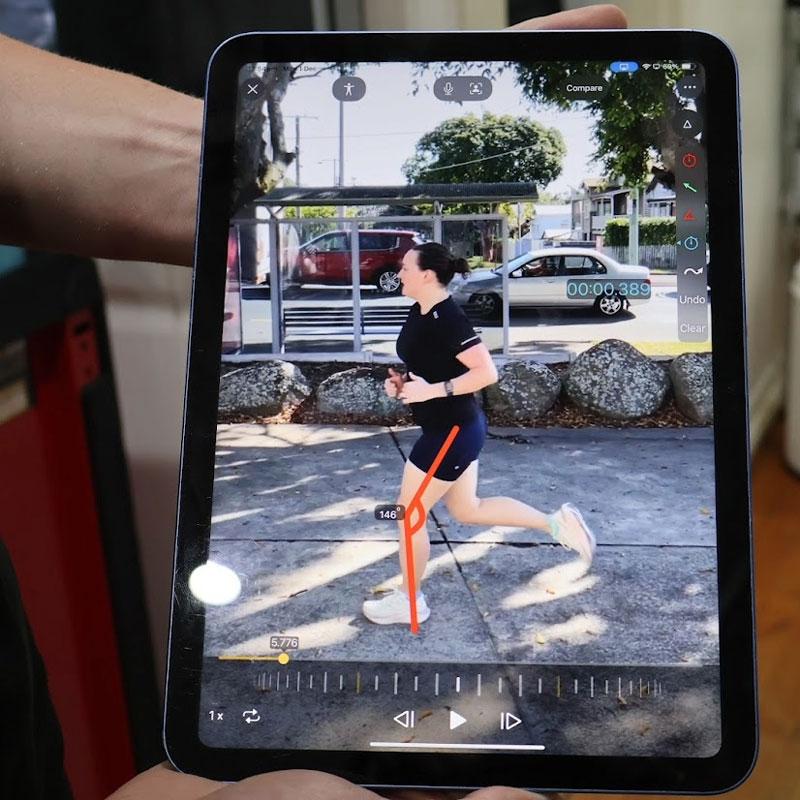
At BL Physio, we take a detailed look at your running biomechanics to identify opportunities to improve efficiency, reduce unnecessary loading and help keep your technique when you're tired after the bike.
Our goal is simple: help you run faster, for longer using less energy and placing less stress on your joints.
We combine video running analysis, hands-on physiotherapy, movement retraining and targeted strength programs to help you develop a more efficient, resilient running style.
Cycling: Get Your Body and Bike Working Together
Cycling places enormous demands on the body, particularly when you're spending hours in an aerodynamic position.
Neck pain, lower back pain, hip tightness, knee pain and numbness can all interfere with your comfort and performance.
Getting your position on the bike right is essential.
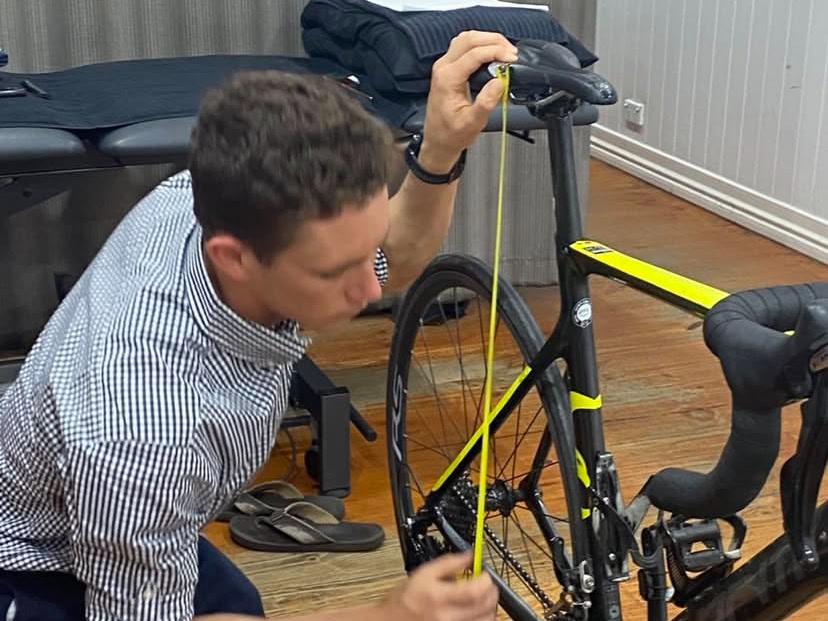
Our bike fitting specialist, Kieran Storch, has over 12 years of experience helping cyclists and triathletes optimise their position.
Now racing professionally, Kieran brings firsthand experience of elite-level performance to every bike fit.
With multiple international triathlon victories and the bike course record at Queensland's iconic Hell of the West, he knows what it takes to perform on the bike.
Kieran continues to offer professional bike fitting at BL Physio on selected Saturdays.
Improve the body. Optimise the bike. Get the two working together.
This is where our physiotherapy background makes a real difference.
We assess your flexibility, strength, stability and movement patterns to identify the physical limitations affecting your cycling position.
We then develop targeted programs to address those limitations while adjusting your bike position to optimise comfort, efficiency and performance.
It's a powerful combination.
Swimming: Improve Mobility, Strength and Efficiency
Swimming demands a unique combination of shoulder mobility, thoracic rotation, stability and coordinated movement.
Restrictions through the shoulders, chest, upper back and neck can affect your stroke mechanics and contribute to unnecessary fatigue or pain.
At BL Physio, we assess the physical components of your swimming mechanics to identify restrictions and strength deficits that may be holding you back.
Our hands-on treatment helps address muscle and fascial tension, while our rehabilitation programs focus on improving mobility, shoulder control and strength.
Importantly, we teach you how to maintain these improvements yourself.
The more you can do independently to keep your body moving well, the better.
Objective Testing: Know Your Strengths and Weaknesses
Guesswork only gets you so far.
At BL Physio, we use advanced assessment technology to measure exactly how your body moves and performs. We use tech including:
- VALD HumanTrak: movement analysis to assess mobility, stability, balance and movement quality.
- VALD Dynamo: objective muscle strength testing to quantify weaknesses and differences between sides.
Combined with our clinical assessments, these technologies help us identify areas that may be limiting your performance or contributing to recurring injuries.
We can then develop a targeted home program to address those weaknesses and track your progress over time.
Rather than simply telling you that you're getting stronger, we can show you the numbers.
More Than Injury Treatment: Building a Better Triathlete
You don't need to be injured to benefit from physiotherapy.
Some of our most rewarding work involves helping athletes who are already training well but want to take their performance to another level.
By combining hands-on treatment, movement retraining, strength development, running biomechanics and professional bike fitting, we aim to help you become a more efficient and resilient athlete.
Whether you're struggling with recurring injuries, looking to improve your running technique, experiencing discomfort on the bike or simply wanting to get more out of your training, we'd love to help.
Ready to Take Your Triathlon Performance to the Next Level?
Book a triathlon physiotherapy assessment at BL Physio in Coorparoo, Brisbane.
Let's identify what's holding you back and develop a plan to help you swim, ride and run at your best.
VALD strength & movement testing
Know Your Strengths and Weaknesses.
Guesswork only gets you so far.
At BL Physio, we use advanced assessment technology to measure exactly how your body moves and performs, so we can find what's holding you back and show you the numbers as you improve.
What we use
- VALD HumanTrak – Movement analysis to assess mobility, stability, balance and movement quality.
- VALD Dynamo – Objective muscle strength testing to quantify weaknesses and differences between sides.
Combined with our clinical assessments, these technologies help us identify areas that may be limiting your performance or contributing to recurring injuries.
We can then develop a targeted home program to address those weaknesses and track your progress over time.
Rather than simply telling you that you're getting stronger, we can show you the numbers.
HumanTrak: seeing how you move
HumanTrak is a 3D motion-capture system. You don't wear any markers or sensors. A camera tracks your whole body while you move through simple tests like a squat, a lunge, a single-leg balance or reaching overhead.
It measures how far your joints move, how well you hold your balance and where you shift or compensate, including the little things that are hard to see by eye, like a knee drifting in or one hip doing more work than the other.
Then we watch it back together. When you can see what your body's doing, the fix makes a lot more sense.
DynaMo: putting a number on strength
DynaMo is a handheld device that measures how hard a muscle can push or pull, and how far a joint moves. We test the muscles that matter for you, such as your hips, quads, hamstrings, calves or shoulders, and compare your left side with your right.
A gap between sides is often where a niggle starts. Once we've got a number, we know exactly what to work on, and we can retest to see whether it's working.
Where testing fits in
- Running assessments: alongside a biomechanical assessment and video running analysis, to understand exactly how your body moves and where your limitations are.
- Triathlon physiotherapy: to find the weaknesses that may be limiting your swim, bike and run, or feeding a recurring injury.
- Coming back from injury: a starting point to measure against, so you can see your strength return over time.
You don't need to be injured to benefit. Plenty of people want to know where their weak links are before a big block of training.
Further reading: Healthdirect: sports injuries
No referral needed for private appointments, and you can claim your health fund rebate on the spot. We also see WorkCover, DVA, NDIS and Medicare Chronic Condition Management Plan clients.
Sports Physiotherapy: common questions
Usually not completely. Complete rest tends to make the tissue weaker. We'll work out what you can keep doing safely, and what to change, while the injury settles.
No. Most of the people we see are weekend and social athletes, along with some who race at a high level.
A lot of runners, cyclists and triathletes, plus people who play weekend sport or train in the gym. If your body is stopping you doing what you love, we'll look at it.
It depends on the injury and how long it's been there. Our aim is to teach you to manage it yourself, so you'll leave each session with things to do at home.
If the area is puffy, swollen, warm or red, if you've had circulation problems, or if pain is getting worse quickly, see your GP first. We'll also refer you on if we think you need a scan or a doctor's opinion.
No. You can book with us directly. You only need a GP referral if you're claiming through Medicare, DVA or WorkCover.
Yes. Physiotherapy can help identify limitations in mobility, strength and movement efficiency that may affect swimming, cycling and running performance.
No. Many triathletes attend physiotherapy to improve running biomechanics, cycling comfort, strength and movement efficiency.
Yes. We assess and manage common triathlon-related injuries, including Achilles tendinopathy, knee pain, hip pain, lower back pain and shoulder problems.
Yes. Professional triathlete and physiotherapist Kieran Storch provides bike fitting services at our Coorparoo clinic on selected Saturdays.
VALD makes the equipment we use to measure movement and strength. HumanTrak analyses how you move with 3D motion capture, and DynaMo measures muscle strength and range of motion. Together they give us objective numbers rather than guesswork.
Yes. Our running assessments combine a biomechanical assessment and video running analysis with VALD HumanTrak movement and strength testing.
No. Many people use it to find weaknesses and differences between sides before they turn into a problem, or to track their progress through a training block.
It shouldn't. You push or pull against the device, and everything is done pain-free. If a test is uncomfortable, we'll stop and adjust it.
Yes. Book through our online booking like any other appointment, or call us on 07 3847 8040 and we'll book it for you.
No. You can book with us directly. You only need a GP referral if you're claiming through Medicare, DVA or WorkCover.
Related articles
28 March 2022
3 Keys To Getting The Most Out of Your Squats For Running And Life
Squatting is a movement that dates back to the very beginning of humankind.
17 May 2023
Free Strength Program for Runners
The thing with a lot of strength work is that it doesn’t actually target what you need to run better.
3 November 2020
What Types of Physio Are There?
The types of physio are super varied. Good to know what options there are so you can get to the right person for your specific condition.
Related services
Sports Physiotherapy near you
We're at 401 Old Cleveland Road, Coorparoo QLD 4151, easy to get to from Camp Hill, Carina, Greenslopes, Woolloongabba, Carindale, Morningside, Norman Park, Holland Park, Cannon Hill, Stones Corner and East Brisbane. We're open six days, with early and evening appointments.
Get directions →Opening hours
- Monday
- 7am – 7pm
- Tuesday
- 7am – 7pm
- Wednesday
- 9am – 6pm
- Thursday
- 7am – 7pm
- Friday
- 7am – 5:30pm
- Saturday
- 10am – 2pm
- Sunday
- Closed