
Dry Needling in Coorparoo, Brisbane
Release Muscle Tension. Ease Pain. Move Freely.
At BL Physio, we offer dry needling at our boutique physiotherapy clinic in Coorparoo, Brisbane, to help relieve muscle tension, reduce pain and improve movement.
Dry needling involves inserting very fine, sterile needles into tight muscle knots, also known as myofascial trigger points. By stimulating these points, we aim to reduce muscle tension and pain, helping your body move more freely.
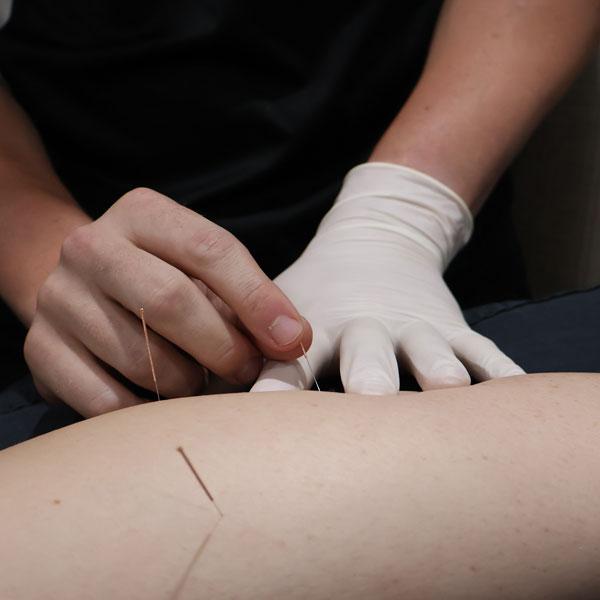
Our Approach to Dry Needling
Rather than simply targeting the painful area, we take a systematic approach, following trails of muscle tension that often extend into and beyond the area of discomfort.
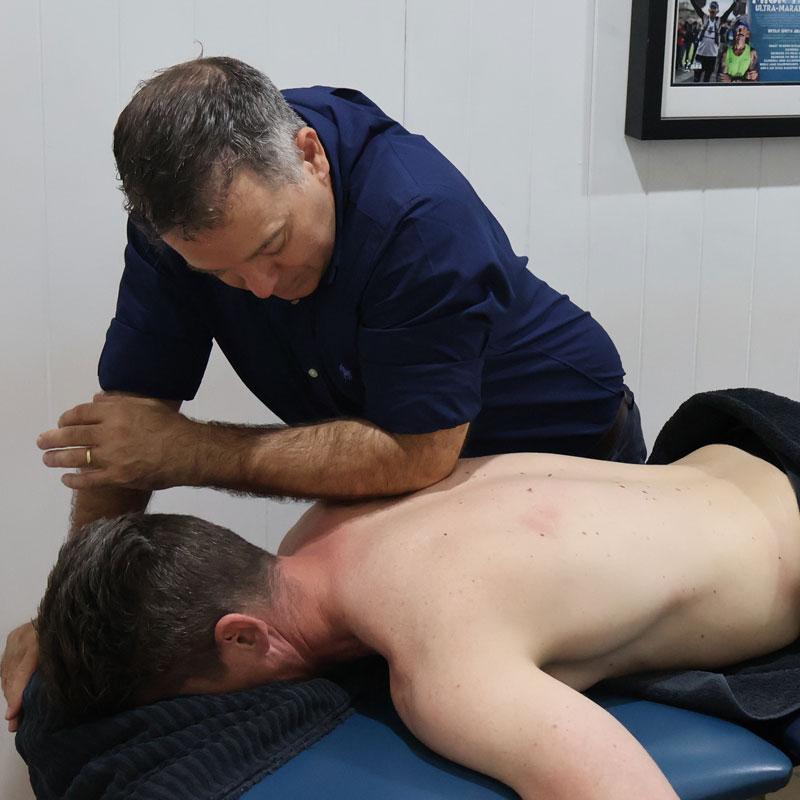
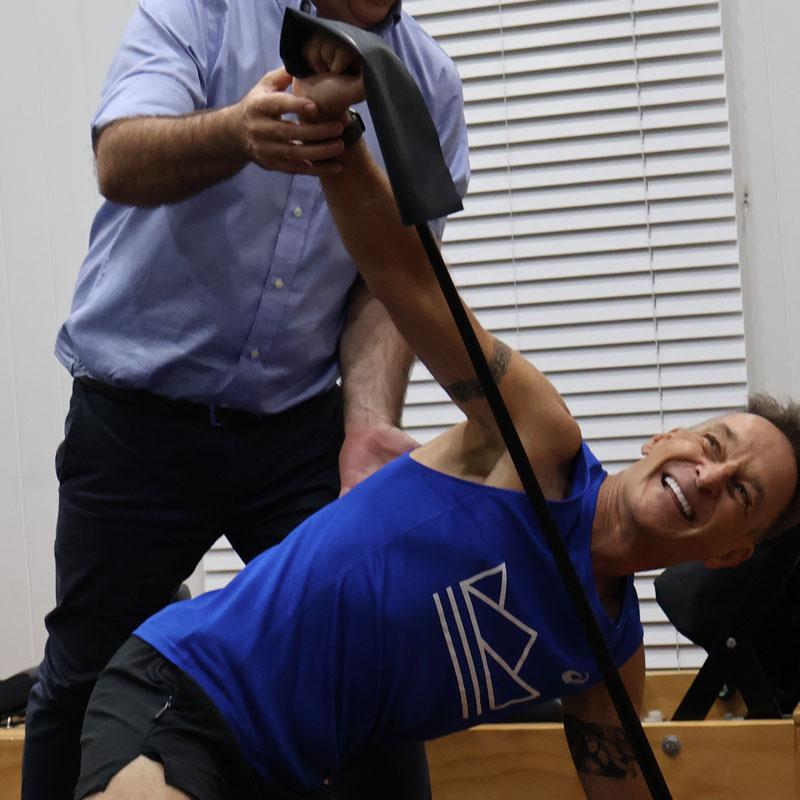
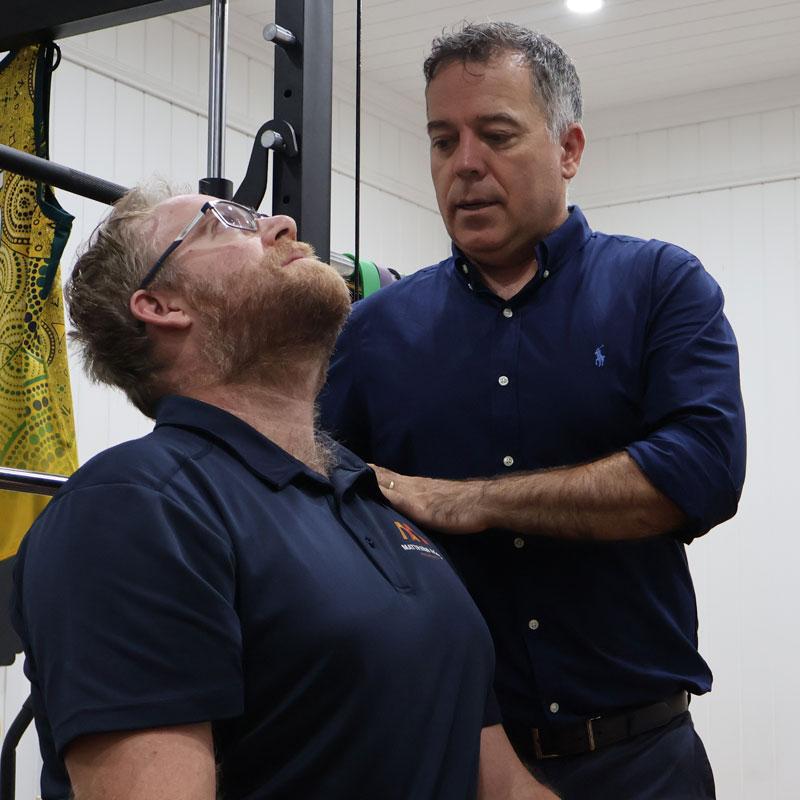
We often use dry needling as part of our treatment, in conjunction with hands-on physio treatment, biomechanics and targeted strength to address the cause and help you make lasting change.
However, for some of our people, dry needling is particularly effective in managing recurring muscle tension and pain, and we also offer it as a standalone treatment when appropriate.
Our goal is to empower, helping you learn to release your own tension, move more freely and get back to doing what you love long term.
Ready to ease your muscle tension? Book your dry needling appointment below.
Trigger points, in plain English
“Your knots in your shoulders, the tight spots, they're actually trigger points.”
Their full name is myofascial trigger points, and they behave in a very specific way. Once you understand how they behave, you can start to control them, instead of letting them control what you can and can't do.
They also follow a map. There are points through the arms, the legs, the back, literally everywhere, and they turn up in predictable places. That's why we can find them quickly. It's a map we use all day, every day, and it's the map we start teaching you.
Latent points: the time bomb
A latent trigger point is one you wouldn't even know was there until someone pressed on it. It just sits quietly in the muscle.
“They behave like a time bomb. They get tighter and tighter and tighter, and then at some point they become what we call an active point. They start to cause pain.”
Even before they hurt, they're working against you. A muscle with tight latent points tires sooner and doesn't switch on as well, so other areas pick up the slack. You might notice little niggles, or pain that seems to shift around. That's very often trigger point pain, which is also called myofascial pain.
So the aim is to free them up before they become active, not just once they start to hurt.
Referral, satellites and trails
Trigger points often send pain somewhere else. That's called referral, and each point has its own pattern. A point in one of the small glute muscles deep in your backside can send pain down the side of your leg, or behind the thigh and into the calf. A point deep in the calf can send pain right down into the heel and foot. So where you feel it isn't always where the problem is.
Then there are satellite points. When an active point sends pain into an area, it can sensitise the muscles in that zone, and they develop trigger points of their own. If you only chase the satellites, the pain keeps coming back. You need to find the point that started it.
Put all that together and you get a trail of tightness: one point leading to the next, sometimes from the glutes, through the lower back and right up into the neck and shoulders. We follow the whole trail, not just the sore spot, and show you how to follow it too.
Trigger points also flare up around an injury. With a disc bulge or a muscle tear, there's the pain from the injury itself and the pain from the sensitised muscles around it. We look after both.
How dry needling works
Dry needling uses a very fine, sterile, single-use needle placed into a trigger point. "Dry" just means nothing is injected. The aim is to get that tight spot in the muscle to let go, so the muscle can relax and move better.
You might feel a small twitch as the muscle responds, or a dull, deep ache that's often the same pain you've been feeling. That's usually a sign we're on the right spot. It shouldn't feel sharp. If anything doesn't feel right, tell us and we stop.
Afterwards we get you moving, with stretching or strength work, so the change lasts. Needling is one tool, not the whole plan. The other ways to free a muscle are squeeze, stretch, trigger and move, and you can do all of those at home.
Is it right for you?
Needling is always optional. We'll explain it first and check your health history before we use it. Things like blood thinners, a bleeding disorder, pregnancy, a weakened immune system or a real fear of needles all change what's appropriate, so let us know.
We won't needle into an area that's puffy, swollen, warm and red, or anything that needs a doctor to look at it first. And if needling isn't for you, there are plenty of other ways to release a muscle.
We commonly use it for:
- Neck and shoulder tightness, and headaches from them
- Lower back and glute pain
- Tight calves, hamstrings and hip flexors in runners
- Forearm tightness with tennis elbow
- Muscle pain that hasn't settled with stretching
Further reading: Australian Physiotherapy Association
No referral needed for private appointments, and you can claim your health fund rebate on the spot. We also see WorkCover, DVA, NDIS and Medicare Chronic Condition Management Plan clients.
Dry Needling: common questions
The needles are very fine. Most people feel a small twitch or a dull ache as the muscle releases, which settles soon after. It shouldn't feel sharp, and we stop whenever you ask.
No. Dry needling targets trigger points in muscles, based on how muscles and nerves work. Acupuncture is based on traditional Chinese medicine.
Some people feel a bit of muscle soreness for a day or so, a bit like after a workout. Gentle movement helps. If it feels worse instead of better, give us a call.
Yes, and we want you to. We'll show you your points and how to use firm pressure with a ball or your thumb, holding for about 20 to 30 seconds and keeping it comfy at all times. The needles stay in the clinic.
No. It's always your choice, and we have other ways to release a muscle.
Related articles

26 November 2019
Free Full Lower Limb Trigger Point Chart, Plus Win A Body Release Pack!
One of the things we love you to understand is that you have an invisible map of trigger points all over your body.
29 November 2017
SSTM® Muscle Hacks: Squeeze, Stretch, Trigger, Move
SSTM® gives you a framework to help muscles: SQUEEZE, STRETCH, TRIGGER and MOVE. Managing your body is a Way of Life…

14 March 2022
Ease Muscle Tension Stress, Anywhere, Any Time, In Under 3 Minutes: FREE GUIDE
We all suffer muscle tension from the stresses of daily life.
Related services
Dry Needling near you
We're at 401 Old Cleveland Road, Coorparoo QLD 4151, easy to get to from Camp Hill, Carina, Greenslopes, Woolloongabba, Carindale, Morningside, Norman Park, Holland Park, Cannon Hill, Stones Corner and East Brisbane. We're open six days, with early and evening appointments.
Get directions →Opening hours
- Monday
- 7am – 7pm
- Tuesday
- 7am – 7pm
- Wednesday
- 9am – 6pm
- Thursday
- 7am – 7pm
- Friday
- 7am – 5:30pm
- Saturday
- 10am – 2pm
- Sunday
- Closed