
3 Keys To Getting The Most Out of Your Squats For Running And Life
· By BL Physio
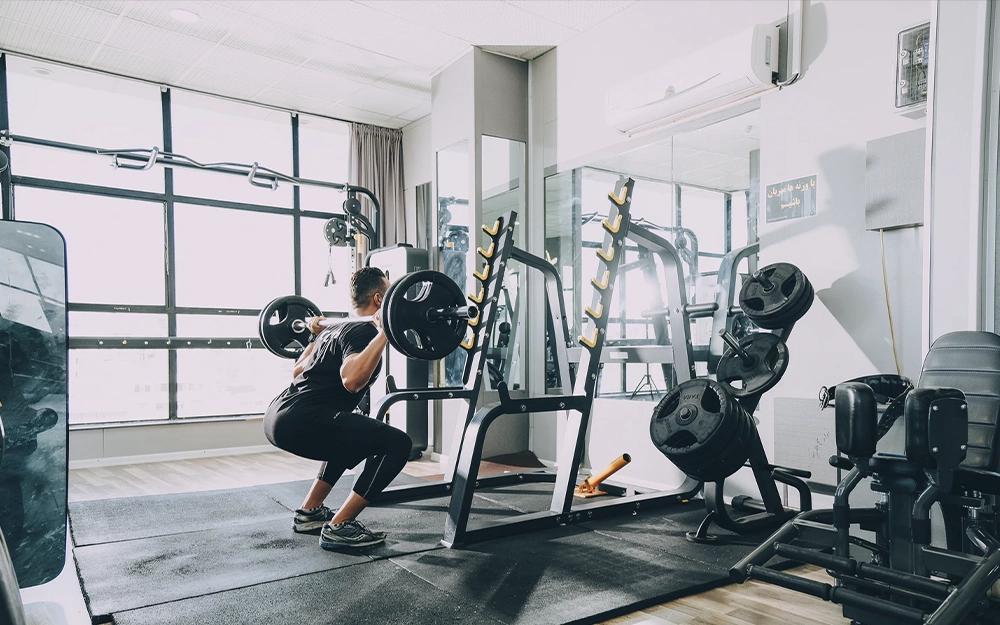
Squatting is a movement that dates back to the very beginning of humankind. At one stage or another, our ancestors would have been found squatting behind a bush ready to pounce on an unknowing dinner-to-be. Fast forward a couple of million years to the present day, and things are not so different. We might not be catching our dinner on a daily basis, but it’s certainly not uncommon to see people lurking around the gym waiting to pounce on the first free squat- rack. Squatting is a movement that has, and continues to, accompany humans throughout every stage of our lives. The squat is how a child transitions from crawling to walking, how a parent bends down to pick up that child, and how that child’s grandparents get up and down from their rocking chair. The squat is an integral part of human movement, but unfortunately it has been over-complicated to the point that it’s sometimes hard to know exactly what we SHOULD or SHOULD NOT be doing.
Today, we are going to break down a couple of key points to ensure that your squat is as good as it can be FOR LIFE.
1. Don’t let the spine and lower leg angles intercept
– A foolproof way of keeping our body in a good position throughout a squat is to be conscious of our spine and lower leg angles.
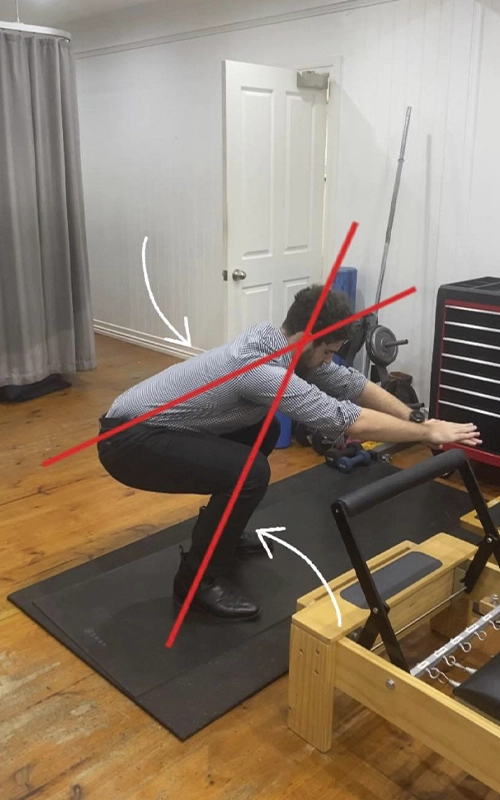
As can be seen in the picture above, when these angles intersect, the lower back and knees are put under a lot of pressure. Long-term, this leads to increased wearing of the joints and increased risk of injury.
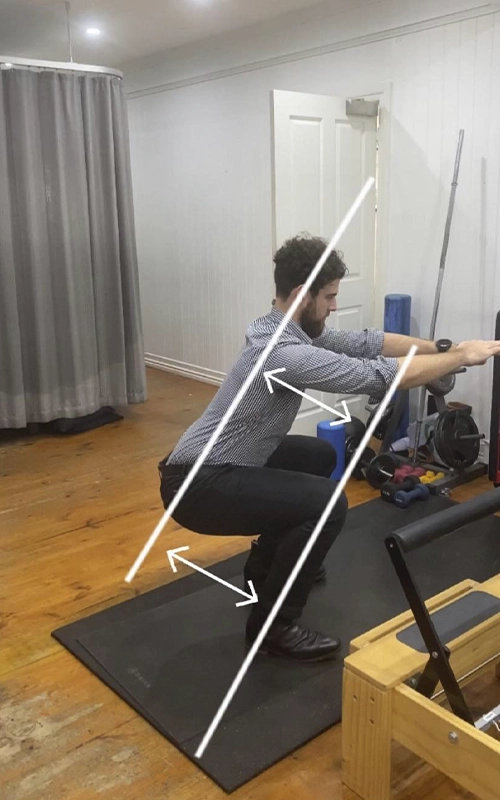
When the angles are close to parallel, our weight stays back on the heels and our spine can maintain its natural curve. This position optimises the weight distribution and load-bearing through our spine, hips and knees.
2. Focus on the FIRST and LAST 20 degrees of the squat
– When squatting, we often forget about the very beginning and end of the movement. We call the first and last 20 degrees our “Inner Range”.
– To start with, we “drop” the first 20 degrees with minimal control, before “catching” our body weight again when glutes and leg muscles kick in.
– When straightening to complete our squat, we often use the upwards momentum to “pop” our hips into extension rather then controlling the transition.
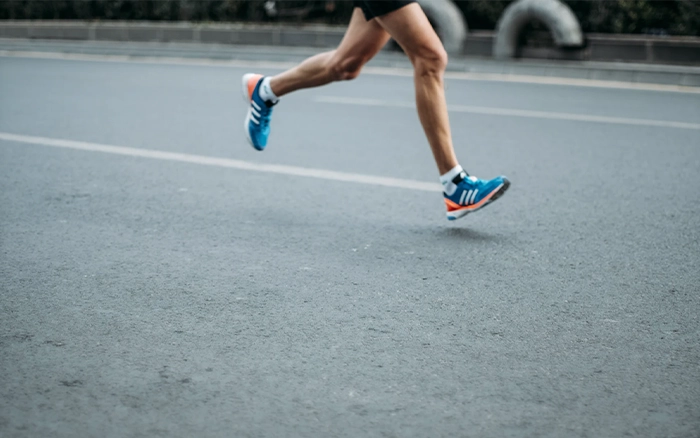
– This first and last 20 degrees may seem somewhat insignificant, but our Inner Range strength is functionally important for walking and running. When our foot first contacts the ground, hips and knees can be around 20 degrees, so weakness here means you sink, losing efficiency and increasing injury risk.
– During your squat, focus on activating the butt and front of your thigh (quads) through Inner Range, controlling the movement for functional running strength.
3. Can the Knee go in front of the toes? What Does The Research Say:
– We have probably all been told at some point to keep our knees behind our toes during a squat to limit “shearing forces” or “compression” on the knees.
– While there is a minor increase in shearing forces when the knees go past our toes (around 28% increase), this leads to a much bigger risk in the lower back.
– Research shows if knees don’t reach the toes, shearing forces in the lower back go up by OVER 1000%. That’s 10 times the load!
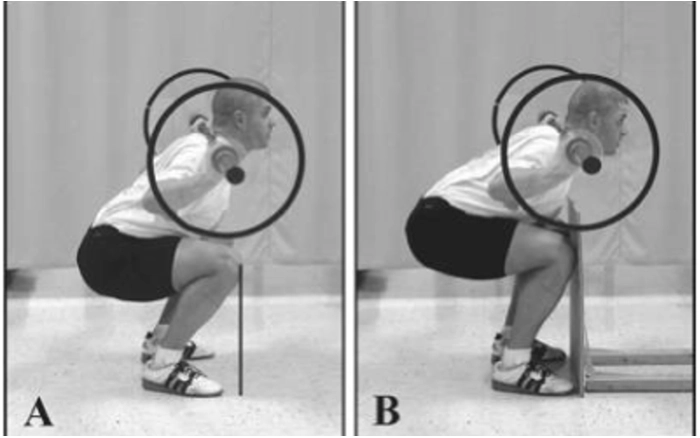
The take-home message is, don’t be afraid to let your knees go a couple of centimetres past your toes at the bottom of a squat. Yes, this does cause a small increase in stress on the knee, but it pales in comparison to the forces going through lower back and hips if done incorrectly.
Squats are a great way to strengthen your lower back and legs and are a great inclusion in all exercise programs. Hopefully, these quick tips can help you to feel more confident with getting the most out of squats for running and for life.
Ps. National Squat Day is coming up next month on the 20th of April, mark it on the calendar!
If you have any pain or discomfort associated with squats or if you have existing lower back, hip or leg injuries, chat to your healthcare professionals to ensure that you’re staying safe while getting strong.
Physio Drew (Drew Arundell)